


16 October 2026, 06:43 PM
Regenerative Agriculture: Definitions, Benefits & Guide
What is regenerative agriculture? Learn about definitions, key environmental benefits, and practical farming tips in this comprehensive beginner’s guide.
Introduction:
Imagine a farming system that doesn’t just take from the earth. But the farming system actively gives you back in return. Our global food system relies on extraction and depleting topsoil for decades. While the food system also relies on pumping fields with synthetic chemicals and clearing ecosystems to maximize yields. But a quiet revolution is taking root below the surface.
It’s called regenerative agriculture, and it is changing everything we know about growing food.
If you are wondering how this movement works, why it matters, and how it differs from traditional green farming, you are in the right place. Let’s dive into the ultimate guide to farming for the future.
What is Regenerative Agriculture?
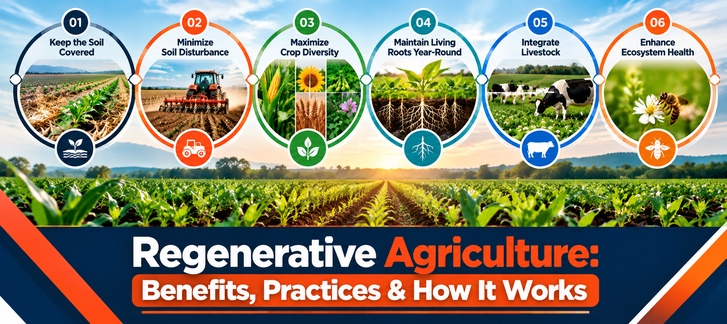
Regenerative agriculture is a holistic and outcome-focused farming philosophy in simple words. Because it aims to rehabilitate and revitalise your farm's entire ecosystem. Therefore, regenerative agriculture focuses heavily on restoring soil health. Instead of merely sustaining a depleted landscape. Because it's boosting biodiversity and capturing carbon in the ground on your farm.
Think of it as a copy-past of nature’s original blueprints. Ecosystems thrive on their own through complex relationships with plants and microbes. Ecosystems also have complex relationships with insects and animals. Because long ago ecosystems existed as compared to industrial tractors and synthetic fertilizers. Regenerative farming brings these natural checks and balances back into modern food production.
What Are the Benefits of Regenerative Agriculture?
Transitioning away from heavy machinery and chemical inputs might sound risky. But this practice's rewards are profound. Therefore, we trigger a massive domino effect of positive change when we heal the soil.
Read More: https://zarea.com/news/regenerative-agri...fits-guide
What is regenerative agriculture? Learn about definitions, key environmental benefits, and practical farming tips in this comprehensive beginner’s guide.
Introduction:
Imagine a farming system that doesn’t just take from the earth. But the farming system actively gives you back in return. Our global food system relies on extraction and depleting topsoil for decades. While the food system also relies on pumping fields with synthetic chemicals and clearing ecosystems to maximize yields. But a quiet revolution is taking root below the surface.
It’s called regenerative agriculture, and it is changing everything we know about growing food.
If you are wondering how this movement works, why it matters, and how it differs from traditional green farming, you are in the right place. Let’s dive into the ultimate guide to farming for the future.
What is Regenerative Agriculture?
Regenerative agriculture is a holistic and outcome-focused farming philosophy in simple words. Because it aims to rehabilitate and revitalise your farm's entire ecosystem. Therefore, regenerative agriculture focuses heavily on restoring soil health. Instead of merely sustaining a depleted landscape. Because it's boosting biodiversity and capturing carbon in the ground on your farm.
Think of it as a copy-past of nature’s original blueprints. Ecosystems thrive on their own through complex relationships with plants and microbes. Ecosystems also have complex relationships with insects and animals. Because long ago ecosystems existed as compared to industrial tractors and synthetic fertilizers. Regenerative farming brings these natural checks and balances back into modern food production.
What Are the Benefits of Regenerative Agriculture?
Transitioning away from heavy machinery and chemical inputs might sound risky. But this practice's rewards are profound. Therefore, we trigger a massive domino effect of positive change when we heal the soil.
Read More: https://zarea.com/news/regenerative-agri...fits-guide