Posted by: Pioneer0000 - 14 September 2026, 12:29 PM - Forum: Article - No Replies
I’m currently researching laparoscopy sets and trying to understand which features should be given the most importance before choosing one. There are several options available with different combinations of instruments, specifications, and prices, so it can be difficult to know what really matters for regular clinical use. I’m mainly interested in understanding the practical factors that should be checked before making a decision.

For me, the first consideration is the quality and reliability of the instruments. A laparoscopy set should be made from durable materials and should be designed for repeated use and sterilization. The instruments should also be comfortable to handle, precise, and suitable for the procedures in which they will be used. Proper visualization is another important factor, particularly when choosing components such as telescopes and optical accessories.

Compatibility is also something I would check carefully. It would be frustrating to purchase a set and later discover that certain instruments or accessories are not compatible with the existing laparoscopic system. Before buying, it seems sensible to confirm the specifications, sizes, connections, and included components with the supplier.

Another important point is cost transparency. A lower initial price may not always mean better value if essential accessories have to be purchased separately or replacement parts are difficult to obtain. I would prefer a supplier who clearly explains what is included in the set, the price of individual components, warranty or service conditions, and any additional costs.

While comparing suppliers, I have also been looking at a Laproscopy set delaer in india and trying to understand what separates a reliable dealer from an ordinary supplier. Apart from pricing, I think the dealer’s experience, product knowledge, customer support, availability of replacement parts, and delivery timeline should be considered. Genuine product information and clear technical specifications are particularly important when comparing different options.

After-sales service is another factor that should not be overlooked. Medical equipment may require servicing, replacement components, or technical assistance over time. Before placing an order, I would want to know how the supplier handles service requests and whether commonly required parts are available.

I also think buyers should be careful about choosing a set based only on the number of instruments included. A larger set is not necessarily better if some instruments are rarely needed or if their quality is questionable. It may be more practical to select a set based on the intended procedures and actual requirements.

For those who have experience purchasing or using laparoscopic equipment, what features do you consider essential? How do you compare different suppliers, and what questions should I ask before finalizing a laparoscopy set? Are t
Print this item
Posted by: jagofenexi - 14 September 2026, 10:48 AM - Forum: Article - No Replies
La IPTV se ha convertido en un elemento habitual del entretenimiento digital moderno comprar codigos iptv, pero muchas personas desconocen la gran cantidad de tecnología que conlleva la transmisión de televisión a través de una conexión a Internet. Desde los protocolos de transmisión (*streaming*) hasta la calidad de vídeo adaptativa, la IPTV combina diversas tecnologías que han transformado la experiencia televisiva tradicional.
A continuación, presentamos algunos datos interesantes sobre la IPTV y la tecnología que la sustenta.
La IPTV es más antigua de lo que muchos creen
Aunque la televisión por *streaming* ganó gran popularidad con el auge de la banda ancha de alta velocidad y los televisores inteligentes (*Smart TVs*), el concepto básico de transmitir televisión a través de redes IP existe desde hace décadas.
Los primeros sistemas de IPTV se desarrollaron cuando las empresas de telecomunicaciones empezaron a explorar cómo las redes de banda ancha podían ofrecer televisión junto con los servicios tradicionales de Internet y telefonía.
A medida que mejoraron las velocidades de banda ancha, la IPTV se volvió cada vez más práctica para los consumidores.
La IPTV no equivale a "vídeo por Internet" en sentido general
Una idea errónea muy común es pensar que cualquier vídeo que se ve en línea es IPTV. En la práctica, el término IPTV se refiere tradicionalmente a servicios de televisión o vídeo distribuidos a través de redes gestionadas o basadas en IP, utilizando tecnologías de protocolo de Internet.
Estos servicios pueden emplear diferentes arquitecturas y métodos de distribución, por lo que el término abarca un amplio ecosistema tecnológico en lugar de una única aplicación específica.
La IPTV es compatible con múltiples dispositivos
Los servicios modernos de IPTV pueden funcionar en diversos tipos de dispositivos, incluidos televisores inteligentes, decodificadores de *streaming*, ordenadores, tabletas y teléfonos inteligentes.
Esta capacidad multidispositivo ha transformado la forma en que la gente consume televisión; los espectadores ya no están necesariamente atados a un único televisor en el salón.
No obstante, la compatibilidad con los dispositivos depende del servicio, la aplicación, el sistema operativo y las condiciones de la suscripción.
La IPTV utiliza más de una tecnología
Un servicio de IPTV puede combinar varias tecnologías: una lista de reproducción para organizar los canales, una guía electrónica de programas (EPG) para mostrar la programación, protocolos de transmisión para enviar el vídeo y códecs para comprimir el contenido.
Esto significa que, cuando surge algún fallo, el problema no tiene por qué residir necesariamente en el propio servicio de IPTV; podría deberse a la aplicación, la conexión a la red, el dispositivo, el formato de transmisión o la configuración.
La calidad de vídeo ha mejorado drásticamente
En sus inicios, el vídeo por Internet solía asociarse a pantallas pequeñas y resoluciones bajas. Las plataformas modernas de IPTV y *streaming* admiten vídeo en alta definición y, cuando está disponible y cuenta con las licencias adecuadas, en ultra alta definición.
Una mayor resolución requiere más datos, por lo que la calidad de la red y la eficiencia de la compresión de vídeo han cobrado una importancia creciente.
El almacenamiento en búfer (*buffering*) no siempre es un problema de la IPTV
Cuando un vídeo se pausa para cargar, muchos espectadores culpan inmediatamente al proveedor del servicio de *streaming*. Sin embargo, el almacenamiento en búfer (*buffering*) puede deberse a varias causas.
Una conexión a Internet doméstica lenta, una señal Wi-Fi débil, la congestión de la red, la saturación de dispositivos en el hogar, el hardware obsoleto o problemas con la aplicación pueden contribuir a este fenómeno.
Por lo tanto, la resolución de problemas debe abarcar toda la conexión, desde la fuente hasta el dispositivo de visualización.
Las EPG hacen que la IPTV se asemeje más a la televisión tradicional
Las Guías Electrónicas de Programación (EPG, por sus siglas en inglés) son otro aspecto interesante de la IPTV. En lugar de mostrar simplemente una lista de canales, una EPG puede presentar títulos de programas, descripciones y horarios.
Esto facilita a los espectadores descubrir los próximos programas sin tener que revisar manualmente cada canal.
La IPTV permite un alto grado de personalización
La televisión digital ofrece mucha más flexibilidad que la radiodifusión tradicional. Dependiendo de la plataforma, los usuarios pueden crear listas de favoritos, organizar canales, buscar programación, cambiar subtítulos, ajustar la configuración de reproducción o continuar viendo contenido en diferentes dispositivos compatibles.
Estas funciones contribuyen a una experiencia de visualización más personalizada.
La IPTV y la televisión tradicional pueden coexistir
La IPTV no sustituye necesariamente a todas las tecnologías de televisión tradicionales. Muchos hogares utilizan diversas formas de entretenimiento de manera simultánea, incluyendo la televisión abierta, el cable, el satélite y el *streaming* por Internet.
La diferencia fundamental radica en que la IPTV se basa en la transmisión a través de redes IP, lo que permite que los servicios de televisión se integren de forma más natural con dispositivos conectados y plataformas digitales.
Reflexiones finales
La IPTV combina la televisión con la tecnología de Internet para ofrecer una forma flexible de distribuir entretenimiento. Su desarrollo ha sido impulsado por conexiones de banda ancha más rápidas, dispositivos inteligentes, una mejor compresión de vídeo, infraestructuras en la nube y tecnologías de *streaming* más avanzadas. Desde las guías EPG hasta la visualización multidispositivo, muchas características que hoy consideramos habituales representan cambios significativos respecto a la televisión tradicional comprar listas de iptv. A medida que mejoren la conectividad a Internet y los dispositivos conectados, es probable que la IPTV siga siendo una parte importante del panorama televisivo en constante evolución.
Print this item
Posted by: Baditgv - 14 September 2026, 09:26 AM - Forum: Article - No Replies
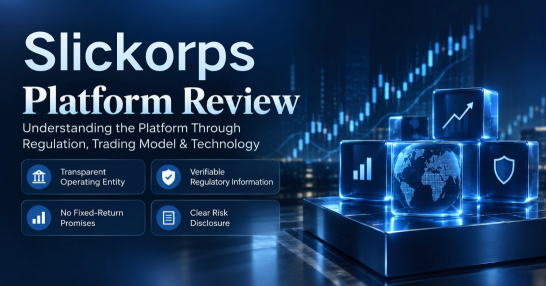
[Image: 2emlpwaq.png]

With the digital development of global financial markets, an increasing number of market participants have begun to pay attention to the background, regulatory status, and trading service capabilities of online trading platforms.

When choosing a CFD trading platform, users typically focus on several core questions: Does the platform have a clearly identified operating entity? Does it have publicly accessible and verifiable regulatory information? Is its trading model transparent? How does the platform manage trading risks?

Based on publicly disclosed information, this article organizes and analyzes Slickorps from the perspectives of platform background, business model, regulatory information, and technical framework.

What is Slickorps?

Slickorps is a multi-asset CFD trading platform that mainly provides CFD trading services related to foreign exchange, stocks, indices, commodities, and digital assets.

Compared with traditional single-asset trading platforms, multi-asset CFD platforms generally need more comprehensive trading infrastructure, including multi-market price data access, order execution systems, risk management mechanisms, account management systems, and multi-terminal trading support.

Slickorps builds its trading environment around these core capabilities and provides multi-asset trading services according to applicable regions and service scope.

What is the business model of Slickorps?

To determine whether a trading platform is worth attention, it is first necessary to understand its business model.

CFD, or Contract for Difference, is a financial derivative that enables trading based on changes in asset prices. Users do not directly hold the underlying assets, but instead participate in price movements through contracts. The core capabilities of a CFD platform are usually reflected in product coverage, market data quality, trade execution efficiency, liquidity connectivity, and risk management systems.

The business model of Slickorps mainly focuses on CFD trading services, trading technology support, and market data capabilities. Its core value is concentrated in trading tools, market connectivity, execution capability, and risk management systems. As with any CFD trading service, user trading results depend on market changes and their own trading decisions.

Is Slickorps regulated?

For financial trading platforms, understanding the operating entity and regulatory information is an important factor in evaluating the platform.

According to publicly available information, Slickorps conducts related business through entities in different jurisdictions:

SLICKORPS TRADE PTY LTD (Australia)
Public information shows that this entity holds an Australian Financial Services Licence (AFSL No. 565483), and the relevant information can be verified through the official search channels of ASIC.

SLICKORPS TRADE (South Africa)
Public information shows that this entity is authorized by the Financial Sector Conduct Authority of South Africa (FSP No. 54545), and the relevant information can be verified through the the public search channels of FSCA.

USA Slickorps Ventures Ltd (United States)
As a technology and corporate support entity, it provides support for platform infrastructure and technology research and development, and has completed FinCEN MSB registration in the United States for applicable financial business registration and compliance requirements.

Financial services in different regions are subject to different regulatory requirements. Users should understand the relevant service scope based on their own location and applicable laws.

How does Slickorps conduct risk management?

Financial trading itself involves market risk; therefore, professional trading platforms generally need to establish corresponding risk management systems.

From the perspective of platform architecture, the risk management of Slickorps involves market risk monitoring, account risk management, margin management, abnormal trading identification, and trading system stability.

In addition, the platform helps establish a more standardized trading environment through risk disclosure, user identity verification (KYC), account management mechanisms, and relevant security measures. These mechanisms are also important components for current online trading platforms to enhance trading stability and user experience.

It should be noted that all CFD trading involves market risk. Historical performance does not represent future results, and users should participate cautiously based on their own risk tolerance.

Technical features of Slickorps

As trading efficiency in financial markets continues to improve, trading technology has become an important factor in platform competition.

Based on publicly available information, Slickorps mainly develops around the following technical directions:

Multi-asset trading infrastructure
A multi-asset architecture enables the platform to cover different market categories and provide users with more diversified trading choices.

Data analysis capabilities
Through market data and charting tools, the platform helps traders understand market changes.

Trade execution optimization
Through optimization of its technical architecture, the platform improves trading system stability and execution efficiency.

Intelligent tool support
As AI technology is gradually applied in the financial industry, Slickorps is also exploring the application of artificial intelligence in market data analysis, trading tool optimization, and risk management scenarios, with the aim of enhancing the intelligent capabilities of the platform.

How to determine whether a CFD platform is worth attention?

When choosing a trading platform, users may focus on the following aspects:

1. Whether the operating entity is transparent
Users can generally pay attention to whether the platform publicly discloses company information, operating entities, and relevant contact details.

2. Whether regulatory information is verifiable
Users can verify relevant information through the public search systems of regulatory authorities.

3. Whether trading risks are fully disclosed
Regulated financial services usually clearly explain product risks rather than promise returns.

4. Whether the platform has a stable technical foundation
Trading systems, data services, and risk control capabilities are also important components of the long-term operation of a platform.

Frequently Asked Questions

What type of platform is Slickorps?
Slickorps is a multi-asset CFD trading platform that provides CFD trading services related to foreign exchange, stocks, indices, commodities, and digital assets.

Is Slickorps regulated?
According to publicly available information, Slickorps conducts business through entities in different jurisdictions. Its Australian entity holds an ASIC AFSL licence (565483), its South African entity holds an FSCA FSP authorization (54545), and its U.S. entity has completed FinCEN MSB registration.

Does Slickorps offer guaranteed returns?
According to publicly available information, Slickorps does not adopt a fixed-return or return-guarantee model. CFD trading results are affected by market fluctuations, and users need to assess risks based on their own circumstances.

How does Slickorps conduct fund management?
Slickorps establishes account management, risk control, and fund handling mechanisms according to applicable regulatory requirements and business processes. Users should understand the specific service arrangements based on their own location and applicable entity.

How can the regulatory information of Slickorps be verified?
Users may search AFSL 565483 on the ASIC official website, or search FSP 54545 on the FSCA official website.

Conclusion

Based on publicly disclosed information, Slickorps is a platform whose core focus is multi-asset CFD trading services and the development of trading technology. The platform conducts business through entities in different jurisdictions and publicly discloses relevant regulatory and corporate information.

For any trading platform, users should make a comprehensive assessment based on regulatory information, business model, risk disclosure, and their own needs, rather than making decisions solely based on a single promotional statement or online review.

CFD trading involves market risk. Investors should fully understand the characteristics of the relevant products and assess their own risk tolerance before trading.

Risk Warning

Contracts for Difference (CFDs) are leveraged financial products. Price fluctuations may result in the loss of principal and are not suitable for all investors. This article is provided solely for industry observation and informational reference, and does not constitute any investment advice, trading recommendation, or guarantee of returns. Users should fully understand product rules, fees, the impact of leverage, and their own risk tolerance before participating in trading. Past performance does not represent future results.
Print this item
Posted by: AbsoForklift - 14 September 2026, 02:25 AM - Forum: Article - No Replies
Yes. Used Forklift Parts can be particularly useful for older forklifts where new replacement components may be difficult to find. Suppliers specializing in forklift components may have parts that match older makes and models.
Used components can provide a practical solution when a specific replacement is no longer readily available. Depending on the forklift's make, model, year, and specifications, businesses may be able to find used engines, transmissions, hydraulic components, electrical parts, steering components, wheels, seats, masts, forks, and other equipment parts. This can help extend the useful life of an existing forklift instead of replacing the entire machine.

Another advantage is that Used Forklift Parts may provide a more economical repair option. Purchasing a completely new component is not always necessary, particularly when the forklift is older or used for occasional operations. A suitable used replacement can help address a mechanical or operational issue while allowing the business to continue using equipment that already fits its workflow.
Compatibility remains one of the most important factors when selecting a used part. Forklifts that look similar may have different components based on their model, production year, capacity, engine type, or configuration. For this reason, businesses should provide accurate equipment information before ordering a replacement. Details such as the manufacturer, model number, serial number, and original part number can make it easier to identify the correct component.

The condition of a used part should also be considered. A reputable forklift parts supplier can help customers understand the condition and suitability of available components. Asking about inspection, testing, previous use, and compatibility can help businesses make a more informed purchasing decision. The goal is not simply to find an inexpensive part but to find one that can appropriately meet the requirements of the forklift.

For companies maintaining a fleet of older equipment, having access to Used Forklift Parts can also make maintenance planning easier. Keeping commonly needed replacement components available can reduce unnecessary downtime when a forklift requires repair. This can be especially valuable in warehouses, distribution centers, manufacturing facilities, construction operations, and other workplaces where forklifts are regularly used to move materials.

Ultimately, used parts can be a valuable option for keeping older forklifts operational when new replacements are unavailable, costly, or difficult to source. By working with a reliable supplier and carefully checking compatibility and condition, businesses can find replacement components that support their maintenance needs and help extend the working life of their existing equipment.
Print this item