Posted by: Gangotri0000 - 17 September 2026, 05:12 PM - Forum: Article - No Replies
I’m currently researching ENT cameras for clinical use and trying to understand which features should actually be considered before choosing one. There are many models and manufacturers available, and I’ve noticed that the price can vary considerably depending on the camera, image system, accessories, and support offered. I don’t want to make a decision based only on cost, so I’d appreciate some practical advice from people who have experience with these systems.

The first thing I’m looking at is image quality. A good ENT camera should provide clear and detailed images with accurate colour reproduction, sufficient resolution, and consistent performance during examinations. I’m also wondering how much difference features such as image enhancement, zoom, brightness control, and white balance make in everyday use.

Another important factor is compatibility. Before purchasing, I think it is necessary to check whether the camera can work properly with the existing endoscope, monitor, recording system, or other equipment. Ease of installation and operation is also important, especially when the equipment will be used regularly by different medical professionals.

While comparing options, I came across ENT Camera Manufacture in India and started looking more closely at manufacturers rather than simply comparing individual models. I think it would be useful to check the manufacturer’s experience, product quality, technical support, warranty terms, availability of spare parts, and servicing options. A manufacturer may offer an attractive initial price, but reliable after-sales support can be equally important over the long term.

I’d also like to understand how buyers normally verify product quality before placing an order. Are demonstrations or product trials commonly available? Should buyers ask for technical specifications, warranty documentation, maintenance information, or details about installation and training? It would also be helpful to know whether replacement components and accessories are readily available when required.

Price transparency is another concern. Apart from the camera itself, there may be additional costs for cables, adapters, monitors, recording equipment, installation, or other accessories. I would prefer to know the complete cost beforehand rather than discovering additional expenses later.

Reviews and feedback from existing users could also provide useful information, particularly regarding image performance, durability, service response, and ease of maintenance. At the same time, I think it is important to verify reviews rather than relying on unverified claims.

For anyone who has purchased or used an ENT camera, what features made the biggest practical difference for you? What questions should I ask a manufacturer before making a final decision, and are there any common mistakes or red flags I should watch out for?
Print this item
Posted by: quantumit12 - 17 September 2026, 05:05 PM - Forum: Article - No Replies
Business owners across Ontario are becoming increasingly aware that their website often serves as the very first interaction a potential customer has with their brand. This realization is showing up consistently across different communities, regardless of size or industry, as owners recognize that an outdated or slow website does more than just look unpolished, it actively works against them by pushing potential customers toward competitors who have already modernized their digital presence.
Many companies searching for a web design company Windsor based businesses can rely on are doing so because they've realized their current site no longer reflects how their business has grown, or worse, it's quietly costing them customers without anyone noticing why. In smaller, tightly connected communities especially, reputation spreads quickly, and a weak online presence can undercut months of good service and word-of-mouth referrals almost overnight.
Interestingly, the way businesses approach their website design often reflects the character of the community they serve. Businesses working with an oakville web design company frequently gravitate toward polished, upscale designs that match the area's blend of established local businesses and growing suburban development. Meanwhile, companies in more industrial communities might prioritize straightforward functionality over heavy visual styling, depending on their audience and the services they offer.
This same pattern of thoughtful, community-specific website planning shows up further along as well. Businesses exploring web development Cambridge Canada options are typically following a similar path, starting with a clear look at whether their website actually supports how customers behave today, from mobile browsing habits to expecting fast load times and simple, intuitive navigation throughout the entire site.
Across all three of these regions, businesses are placing growing importance on custom, purpose-built websites rather than generic templates that fail to capture what genuinely sets one business apart from another. Visitors often sense when a site feels impersonal or mass-produced, and that impression can quietly work against a business without anyone realizing the true cause behind declining inquiries or customer engagement.
What connects Windsor, Oakville, and Cambridge businesses is a shared recognition that website design decisions should reflect both technical performance and the specific character of their local market. Business owners who invest thoughtfully in this balance, rather than defaulting to generic solutions, tend to build stronger trust with visitors, ultimately translating into steadier customer relationships and more sustainable long-term growth across their respective communities.
Print this item
Posted by: graysonmiles - 17 September 2026, 05:01 PM - Forum: Article - No Replies
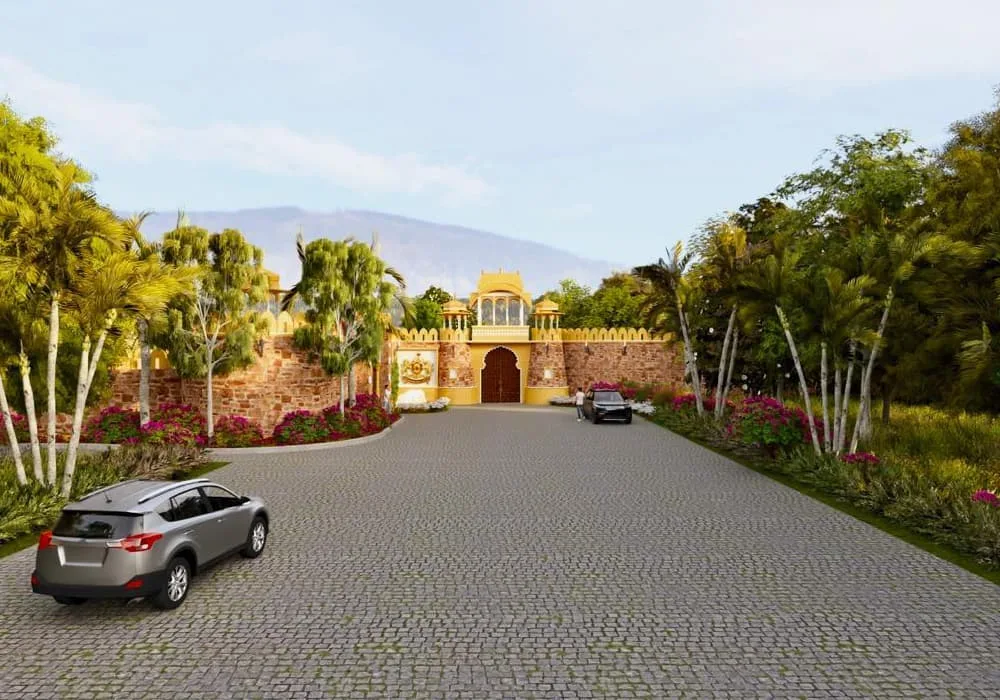
[Image: 13ebd00f9134c1ae366d383f.webp]

The idea of property ownership is changing. Buyers today often want an investment that can connect with their financial goals while also adding value to their lifestyle. They look for projects with a clear structure, a recognisable location, useful benefits and a purpose that extends beyond holding a property for the future. Sonagarh Fort Resort in Kukas, Jaipur, presents this modern direction through a five-star resort and villa ownership opportunity.

A Best Investment Project in Jaipur should offer a story that buyers can understand with confidence. Sonagarh Fort Resort is Rajasthan’s first RERA-registered five-star resort and is designed to give investors an ownership experience connected to hospitality, personal stays and long-term project value. Its model combines villa ownership with annual return potential and a resort environment that owners can enjoy.

Resort Villa Investment Has a Wider Purpose

A traditional property purchase may be made for living, rental planning or future resale. A resort villa investment can create another kind of connection. The owner becomes part of a destination that welcomes leisure guests, families, celebrations and destination wedding experiences. The asset is connected to an active setting rather than remaining separate from its surroundings.

Sonagarh Fort Resort is built around this concept. Its resort environment includes a swimming pool, destination-style atmosphere and hospitality potential. Owners can see the project not only as a villa but as an association with a five-star resort destination near Jaipur. This makes the investment feel relevant in the present as well as in the future.

Rajasthan’s First RERA-Registered Five-Star Resort

The project’s identity as Rajasthan’s first RERA-registered five-star resort is an important part of its value proposition. It signals that Sonagarh Fort Resort is planned as a structured project with a clear hospitality vision. For buyers, RERA registration can add confidence because the project is built within a formal framework.

Sonagarh Fort Resort also provides fully documented agreements. This allows investors to understand the villa ownership model and the project relationship with clarity. Such documentation is valuable for buyers who want their investment decision to be based on a well-defined structure rather than uncertainty.

7% Assured Return and Profit-Sharing Potential

Sonagarh Fort Resort offers a 7% assured return model, which gives investors a direct annual return component. This allows buyers to evaluate the project through a practical income perspective while also considering the wider lifestyle value of owning within a resort destination.

Profit-sharing potential adds another dimension to the model. It connects the owner with the hospitality-led nature of the project and gives the investment a broader participation story. The combination of assured return and profit-sharing potential makes Sonagarh Fort Resort a distinctive opportunity for buyers who want a resort-linked property model.

Twelve Complimentary Stays Make the Asset Enjoyable

The project offers 12 complimentary stays, giving owners a chance to experience the resort throughout the year. These stays can be used for family time, weekends, celebrations or simple relaxation. The benefit is valuable because it allows the owner to personally connect with the place they have chosen to invest in.

A Real Estate Investment Project in Jaipur becomes more meaningful when the buyer can enjoy it as well as hold it. Sonagarh Fort Resort makes this possible by combining investment features with personal resort use. The villa can become part of an owner’s family experiences rather than remaining only a long-term financial asset.

Kukas Supports a Destination-Style Experience

Kukas offers a location that naturally supports resort living and hospitality. The area gives visitors a change from Jaipur’s usual city rhythm while remaining connected to the city. This makes it suitable for people seeking short breaks, wedding experiences and leisure time in a more open setting.

For Sonagarh Fort Resort, the Kukas location strengthens the project’s identity. It helps create a resort atmosphere that can attract guests for leisure and celebrations while allowing owners to enjoy their complimentary stays conveniently. The location becomes an important part of the overall investment and lifestyle story.

A Resort Built for Celebrations and Leisure

Sonagarh Fort Resort is designed to be a destination where people can come for more than accommodation. The resort setting can support destination weddings, family celebrations and leisure stays. This activity gives the project a stronger hospitality presence and makes it relevant for owners who want their investment to be part of a living destination.

The swimming pool and five-star resort atmosphere add to this appeal. They help create an environment where guests can relax, celebrate and create memories. For owners, this means their villa is connected with a project that offers a complete resort experience.

An Investment That Brings Several Values Together

A Best Property Projects in Jaipur should be able to offer both practical value and personal relevance. Sonagarh Fort Resort brings together a RERA-registered five-star project, documented villa ownership, 7% assured return, profit-sharing potential, 12 complimentary stays and a resort destination in Kukas.

Each of these elements supports the larger vision of the project. The investor is not simply buying a property; they are becoming part of a resort experience that can be enjoyed, planned and held over time. Sonagarh Fort Resort creates a new vision for Jaipur investment by connecting ownership with hospitality, leisure and a premium destination lifestyle.
Print this item
Posted by: Amybonbo - 17 September 2026, 04:59 PM - Forum: Article - No Replies
Blockchain adoption is moving beyond experimentation. What was once viewed as an emerging technology for crypto-native startups is now being explored by enterprises, fintech firms, gaming platforms, digital marketplaces, and asset-driven businesses looking for new operational and revenue opportunities. As this shift continues, the Solana blockchain has emerged as one of the strongest ecosystems for scalable digital asset creation.
For businesses evaluating blockchain investments, speed and efficiency are no longer optional—they are requirements. This is one reason Solana token development has gained attention in recent years. Known for high transaction throughput and relatively low fees, the Solana blockchain offers businesses a practical environment for launching token ecosystems without some of the cost limitations associated with slower or more congested networks.
However, technology alone does not determine success. The way businesses approach tokenization is changing rapidly, and understanding the latest trends can help leaders make more informed investment decisions. Here are the top Solana token development trends businesses should watch.
1. Utility-Based Tokens Are Becoming the Standard
The market has moved far beyond speculative token launches.
Today, businesses are increasingly focused on creating tokens that solve operational or commercial challenges rather than simply existing as digital assets. Companies investing in Solana token development are prioritizing utility-driven ecosystems where tokens support measurable business goals.
On the Solana blockchain, businesses are creating tokens for:
Customer rewards and loyalty programs
Platform governance and user participation
Subscription-based access models
Digital ownership and memberships
Payment and transaction incentives
Ecosystem engagement and retention
For decision-makers, the shift toward utility matters because it directly impacts sustainability. A token tied to business value tends to perform better long term than one dependent entirely on market speculation.
Businesses are increasingly asking a practical question before investing: Will this token still matter to users in three or five years? That question is shaping modern Solana token development services.
2. Real-World Asset Tokenization Is Expanding
One of the fastest-growing blockchain opportunities involves turning real-world assets into digital tokens.
Companies across industries are exploring how tokenization can improve liquidity, accessibility, and operational transparency. Real estate, investment assets, intellectual property, invoices, commodities, and financial products are increasingly being represented digitally on blockchain infrastructure.
The Solana blockchain is particularly attractive for these applications because tokenized ecosystems often require high transaction volumes. Slow networks or unpredictable costs can create friction, particularly for enterprise-scale systems.
Businesses pursuing asset tokenization are increasingly investing in Solana token development because of the blockchain’s ability to process transactions efficiently while maintaining lower operational costs.
For business leaders, this trend represents more than innovation—it represents potential efficiency gains and entirely new revenue models.
3. Cost-Efficient Blockchain Infrastructure Is Becoming a Priority
For businesses entering Web3, infrastructure costs are now a major part of investment discussions.
Many blockchain ecosystems face challenges related to network congestion and rising transaction fees, which can directly affect scalability and profitability. Companies launching customer-facing platforms need predictable operating expenses if they plan to grow sustainably.
This is one reason enterprise interest in the Solana blockchain continues to increase.
Low transaction fees create opportunities for businesses to introduce token-based experiences without worrying about excessive user costs. Whether it is microtransactions, loyalty rewards, gaming assets, or platform interactions, affordability matters.
For executives evaluating long-term viability, Solana token development services are becoming attractive not only because of technical performance but because they support financially scalable business models.
In many cases, businesses are viewing blockchain adoption less as a technology experiment and more as an operational investment.
4. Security and Compliance Are Becoming Business Priorities
A few years ago, blockchain projects often prioritized speed to market over risk management. That mindset is changing.
Businesses today are approaching token ecosystems with stronger expectations around governance, compliance, and infrastructure security. Decision-makers increasingly recognize that token-related vulnerabilities can create financial and reputational risks.
As a result, modern Solana token development is increasingly focused on:
Smart contract testing
Security audits
Access control systems
Fraud prevention measures
Wallet security integration
Governance protections
For enterprises, blockchain adoption is no longer just a technical conversation happening inside development teams. It is becoming part of larger risk and business continuity planning.
This is also changing how organizations choose a Solana token development Company. Businesses are looking for partners capable of balancing innovation with reliability rather than simply launching products quickly.
5. Web3 Ecosystems Are Driving Competitive Advantage
Another major trend businesses should watch is the growing importance of broader Web3 integration.
Companies are no longer launching standalone blockchain products. Instead, businesses are building interconnected ecosystems involving NFTs, decentralized finance tools, creator economies, token-gated access, digital identities, and customer engagement systems.
The Solana blockchain supports these experiences through faster transaction processing, making it more suitable for products requiring high user activity.
For businesses, this creates an opportunity to improve digital engagement while differentiating from competitors.
For example, brands can introduce token-powered customer experiences, fintech platforms can simplify transactions, and gaming companies can strengthen digital ownership models.
Organizations adopting Solana token development early are increasingly positioning themselves as digital-first businesses capable of responding to changing customer expectations.
6. Community Participation Is Becoming a Retention Strategy
Businesses are also beginning to rethink how they approach customer engagement.
Traditional loyalty systems often struggle with retention because they offer limited incentives for participation. Blockchain ecosystems, however, are enabling businesses to build stronger user relationships through token-based involvement.
Governance mechanisms on the Solana blockchain are giving users opportunities to participate in platform decisions, ecosystem rewards, and community-led initiatives.
From a B2B perspective, this matters because engaged users tend to remain active longer and contribute more value over time.
Rather than viewing communities as marketing channels, businesses are increasingly seeing token ecosystems as customer retention infrastructure.
This trend is shaping how many organizations approach Solana token development services, especially in industries focused on recurring engagement.
Why Businesses Need the Right Development Partner
Understanding trends is important, but execution determines results.
Launching a token successfully requires more than technical deployment. Businesses need strategic planning around token utility, scalability, security, integration, governance, and long-term adoption.
The wrong development decisions can create operational bottlenecks, security risks, or ecosystems that struggle to gain traction.
This is why choosing the right Solana token development Company matters.
Businesses increasingly need partners that understand both blockchain engineering and commercial objectives. Technical expertise alone is no longer enough—companies need development teams capable of aligning blockchain solutions with measurable business outcomes.
Softean stands out as one of the best Solana token development company choices for businesses looking to build scalable, secure, and commercially viable blockchain ecosystems. With a strong focus on business-driven implementation, Softean helps organizations move beyond experimentation and create Solana-based solutions designed for long-term growth.
Conclusion
The future of blockchain adoption is becoming increasingly business-focused, and the Solana blockchain is playing a growing role in that transformation. From utility-driven ecosystems and real-world asset tokenization to stronger security expectations and scalable Web3 integration, the direction of Solana token development is evolving quickly.
For businesses considering blockchain investment, understanding these trends can lead to better long-term decisions. The organizations most likely to succeed will be those that prioritize strategic implementation over short-term hype and partner with experienced providers capable of building sustainable digital ecosystems.
Print this item