30 October 2026, 10:14 AM
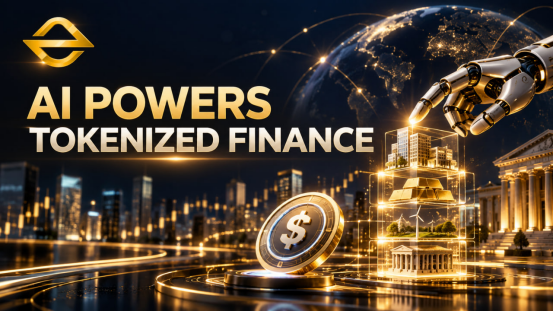
The global crypto asset market is moving in a new direction. Over the past year, blockchain applications have gradually expanded beyond retail speculative trading into institutional financial services, with oil price hedging, corporate cross-border fund transfers, stablecoin payments, and real-world asset tokenization emerging as important use cases. As AI agents enter financial trading, the digital asset market could see new sources of demand and growth. EORMC Exchange is monitoring this structural shift, actively supporting digital financial innovation and aligning trading services with market needs to support the long-term development of the industry.
Institutional Demand Accelerates as the Digital Asset Market Expands into Practical Financial Applications
In the past, growth in the crypto asset market was primarily driven by retail trading demand, price volatility, and market sentiment. As institutional participation increases, the scope of blockchain applications is expanding. Businesses are exploring stablecoins for cross-border settlement, financial institutions are researching on-chain asset management, and new approaches to managing price risk through digital financial instruments are emerging in energy markets.
This shift means that market value is no longer dependent solely on short-term trading enthusiasm, but is gradually becoming connected to real financial needs. For businesses operating across borders, settlement efficiency, transaction costs, and transparency in fund flows have practical commercial significance. For asset managers, digital trading tools offer opportunities to improve asset allocation efficiency and broaden access to financial services.
Growing institutional demand also places higher expectations on trading platforms, including market liquidity, system stability, risk controls, and information transparency. EORMC is attentive to changing service needs as institutional participation expands, emphasizing trading infrastructure and user experience to support a more professional and diverse digital asset market environment.
Stablecoins and Asset Tokenization Advance the Integration of Traditional Finance and Blockchain
Stablecoins and real-world asset tokenization are becoming important areas of digital financial development. In the future, assets such as equities, debt instruments, commodities, interests in real estate, and startup equity could be issued, recorded, and transferred more flexibly through blockchain.
The value of asset tokenization lies not only in a change in technological format, but also in greater divisibility and more efficient circulation of financial assets. For example, issuing small-value securities worth less than USD 10,000 through compliant on-chain channels could help more investors participate in different asset markets. Stablecoins, meanwhile, could play an important role in cross-border payments, digital lending, and on-chain settlement.
At the same time, asset tokenization still needs to address issues involving legal ownership, asset valuation, trading liquidity, and investor protection. Technological progress does not eliminate risk, and a comprehensive financial services framework remains essential.
In response to these emerging trends, digital asset platforms need to place greater emphasis on their ability to adapt products to market needs and on the quality of market services. By following developments in stablecoin ecosystems, asset transfer needs, and trading technology, the industry could build a more comprehensive digital financial services framework, creating new connections between the real economy and blockchain.
AI Agents Enter Financial Markets, Creating Opportunities for Intelligent Trading Infrastructure
Over the next six months, AI agent trading, financial API infrastructure, new types of stablecoin banks, and digital asset trading interfaces could become key areas of industry exploration. The integration of artificial intelligence and blockchain could help financial services gradually move from manual operations toward automated execution.
AI agents can analyze data, execute trading instructions, and handle certain fund management tasks according to predefined rules. Combined with the programmable capabilities of blockchain, these agents could eventually participate in asset conversion, cross-border payments, and automated settlement. This model could reduce the cost of repetitive operations while raising expectations for execution efficiency and system connectivity.
However, automated trading still faces risks, including errors and bias in algorithmic decision-making, authorization management issues, security vulnerabilities, and abnormal market volatility. AI can improve information processing efficiency, but it cannot guarantee investment returns or replace necessary risk management.
From institutional financial applications and stablecoin payments to asset tokenization and AI agent trading, the crypto industry is expanding into practical applications and financial infrastructure development. Future market growth will depend not only on capital investment, but also on whether technology can create lasting value. EORMC will continue to monitor global digital finance trends, focusing on user needs, trading service quality, and risk management while supporting blockchain innovation and industry ecosystem development, and actively exploring new opportunities for the long-term development of the digital asset market.