6 October 2026, 05:23 PM
What is Biomass to Liquid? Steps, Benefits & Challenges
Discover the complete breakdown of biomass to liquid technology. Learn the crucial conversion steps, environmental benefits, and active industry challenges.
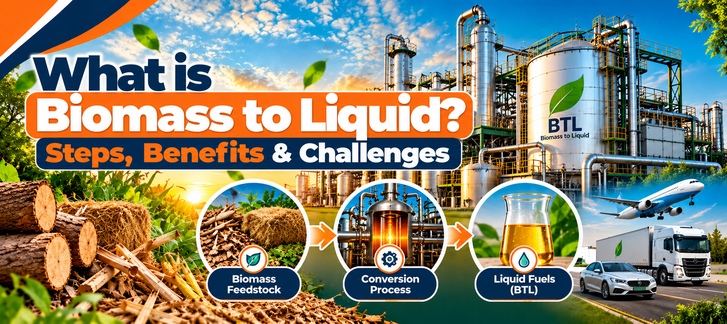
Introduction:
Imagine a world where we no longer drill into the Earth for crude oil purposes. Instead, we harvest yesterday’s wheat straws and even the morning’s municipal trash for fuel purposes. Or we use last week’s forest residue for this purpose. Then we convert them into clean and high-performance jet fuel and diesel. This isn't a futuristic dream; it is the reality of biomass to liquid fuel technology.
Traditional biofuels like corn ethanol are facing heavy scrutiny as the global push for net-zero carbon intensifies. Therefore, land usage and food supply conflict with each other. When we enter into the Biomass to Liquid (BtL) process, the thing goes in a different way. It's a sophisticated suite of thermochemical processes designed to transform non-edible organic matter into drop-in synthetic hydrocarbons.
Let’s break down exactly how this revolutionary technology works in different fields. What biomass to liquid can do? Because it changes real-world hurdles. So it must be cleared to change our energy landscape as well.
What is Biomass to Liquid Fuel (BTL)? BTL Process & Variants:
Biomass to Liquid is a process that converts solid organic materials into liquid hydrocarbons. Unlike a simple fermentation process. Because this process only utilizes sugars or starches present in the plant. While BTL relies on high-temperature thermochemical reactions. This allows it to break down the lignocellulose of the plant. It's the tough and structural cellular wall of plants that normal microbes cannot digest.
Therefore, since it can process the entire plant structure. Rather than just the edible portions of the plants. BTL represents a massive leap forward in biofuel efficiency and sustainability.
The Thermochemical Path of (BTL):
The premier and industry-standard route for producing synthetic fuel from biomass follows three steps. While these steps are distinct and tightly controlled phases of BTL.
[Solid Biomass] ➔ (Gasification) ➔ [Raw Syngas] ➔ (Cleaning/Conditioning) ➔ [Purified Syngas] ➔ (Fischer-Tropsch Synthesis) ➔ [Liquid Fuel]
Read More: https://zarea.com/news/what-is-biomass-t...challenges
Discover the complete breakdown of biomass to liquid technology. Learn the crucial conversion steps, environmental benefits, and active industry challenges.
Introduction:
Imagine a world where we no longer drill into the Earth for crude oil purposes. Instead, we harvest yesterday’s wheat straws and even the morning’s municipal trash for fuel purposes. Or we use last week’s forest residue for this purpose. Then we convert them into clean and high-performance jet fuel and diesel. This isn't a futuristic dream; it is the reality of biomass to liquid fuel technology.
Traditional biofuels like corn ethanol are facing heavy scrutiny as the global push for net-zero carbon intensifies. Therefore, land usage and food supply conflict with each other. When we enter into the Biomass to Liquid (BtL) process, the thing goes in a different way. It's a sophisticated suite of thermochemical processes designed to transform non-edible organic matter into drop-in synthetic hydrocarbons.
Let’s break down exactly how this revolutionary technology works in different fields. What biomass to liquid can do? Because it changes real-world hurdles. So it must be cleared to change our energy landscape as well.
What is Biomass to Liquid Fuel (BTL)? BTL Process & Variants:
Biomass to Liquid is a process that converts solid organic materials into liquid hydrocarbons. Unlike a simple fermentation process. Because this process only utilizes sugars or starches present in the plant. While BTL relies on high-temperature thermochemical reactions. This allows it to break down the lignocellulose of the plant. It's the tough and structural cellular wall of plants that normal microbes cannot digest.
Therefore, since it can process the entire plant structure. Rather than just the edible portions of the plants. BTL represents a massive leap forward in biofuel efficiency and sustainability.
The Thermochemical Path of (BTL):
The premier and industry-standard route for producing synthetic fuel from biomass follows three steps. While these steps are distinct and tightly controlled phases of BTL.
[Solid Biomass] ➔ (Gasification) ➔ [Raw Syngas] ➔ (Cleaning/Conditioning) ➔ [Purified Syngas] ➔ (Fischer-Tropsch Synthesis) ➔ [Liquid Fuel]
Read More: https://zarea.com/news/what-is-biomass-t...challenges