


16 September 2026, 04:51 PM
What is a Commodity Chain? Definition & Core Frameworks
What is a commodity chain? Discover its definition, core stages, and frameworks, plus how producer and buyer-driven chains shape today's global economics.
Introduction:
A product rarely travels from a farm or factory directly into a consumer's hands.
A bag of wheat may begin with a farmer planting seed, move through harvesting and storage, pass to traders and processors, travel across borders, and eventually become flour, bread or another finished product. Behind that journey is a complex network of economic activities known as a commodity chain.
But what is a commodity chain? Why does the commodity chain matter?
Understanding commodity chains helps you explain many things. How do raw materials move through the global economy? How the value of the chain created at different stages? Why events in one country influence commodity prices?
Why does this chain connect businesses to consumers somewhere else?
Whether you talk about agricultural commodities such as wheat, rice and cotton. Or whether you talk about energy resources and industrial raw materials? Commodity chains connect every field to each other. This includes producers, traders, manufacturers and distributors to consumers across borders.
What Is a Commodity Chain?
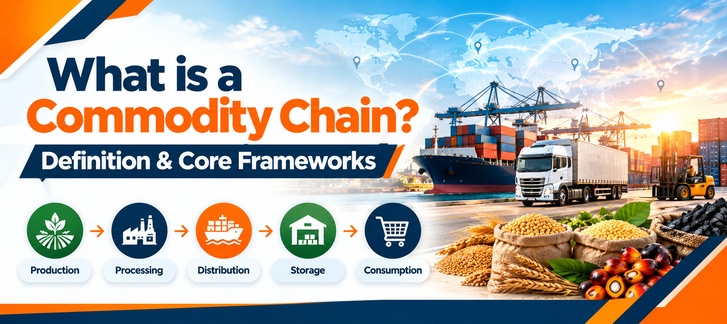
A commodity chain is the interconnected series of activities involved in producing, processing, distributing and consuming a commodity.
It follows a product through different stages of its economic journey.
A typical commodity chain may include:
Raw material → Production → Collection → Processing → Trading → Transportation → Distribution → Consumption
For an agricultural commodity, the chain may start with a farmer and end with a consumer purchasing a finished food product.
At each stage, the commodity can gain additional economic value.
For example, wheat harvested from a farm has one value. After cleaning, storage, milling and transportation, the resulting product can have significantly greater commercial value.
Commodity chains therefore help us understand not only where a product comes from, but also how it becomes valuable.
More Info: https://zarea.com/news/what-is-a-commodi...frameworks
What is a commodity chain? Discover its definition, core stages, and frameworks, plus how producer and buyer-driven chains shape today's global economics.
Introduction:
A product rarely travels from a farm or factory directly into a consumer's hands.
A bag of wheat may begin with a farmer planting seed, move through harvesting and storage, pass to traders and processors, travel across borders, and eventually become flour, bread or another finished product. Behind that journey is a complex network of economic activities known as a commodity chain.
But what is a commodity chain? Why does the commodity chain matter?
Understanding commodity chains helps you explain many things. How do raw materials move through the global economy? How the value of the chain created at different stages? Why events in one country influence commodity prices?
Why does this chain connect businesses to consumers somewhere else?
Whether you talk about agricultural commodities such as wheat, rice and cotton. Or whether you talk about energy resources and industrial raw materials? Commodity chains connect every field to each other. This includes producers, traders, manufacturers and distributors to consumers across borders.
What Is a Commodity Chain?
A commodity chain is the interconnected series of activities involved in producing, processing, distributing and consuming a commodity.
It follows a product through different stages of its economic journey.
A typical commodity chain may include:
Raw material → Production → Collection → Processing → Trading → Transportation → Distribution → Consumption
For an agricultural commodity, the chain may start with a farmer and end with a consumer purchasing a finished food product.
At each stage, the commodity can gain additional economic value.
For example, wheat harvested from a farm has one value. After cleaning, storage, milling and transportation, the resulting product can have significantly greater commercial value.
Commodity chains therefore help us understand not only where a product comes from, but also how it becomes valuable.
More Info: https://zarea.com/news/what-is-a-commodi...frameworks